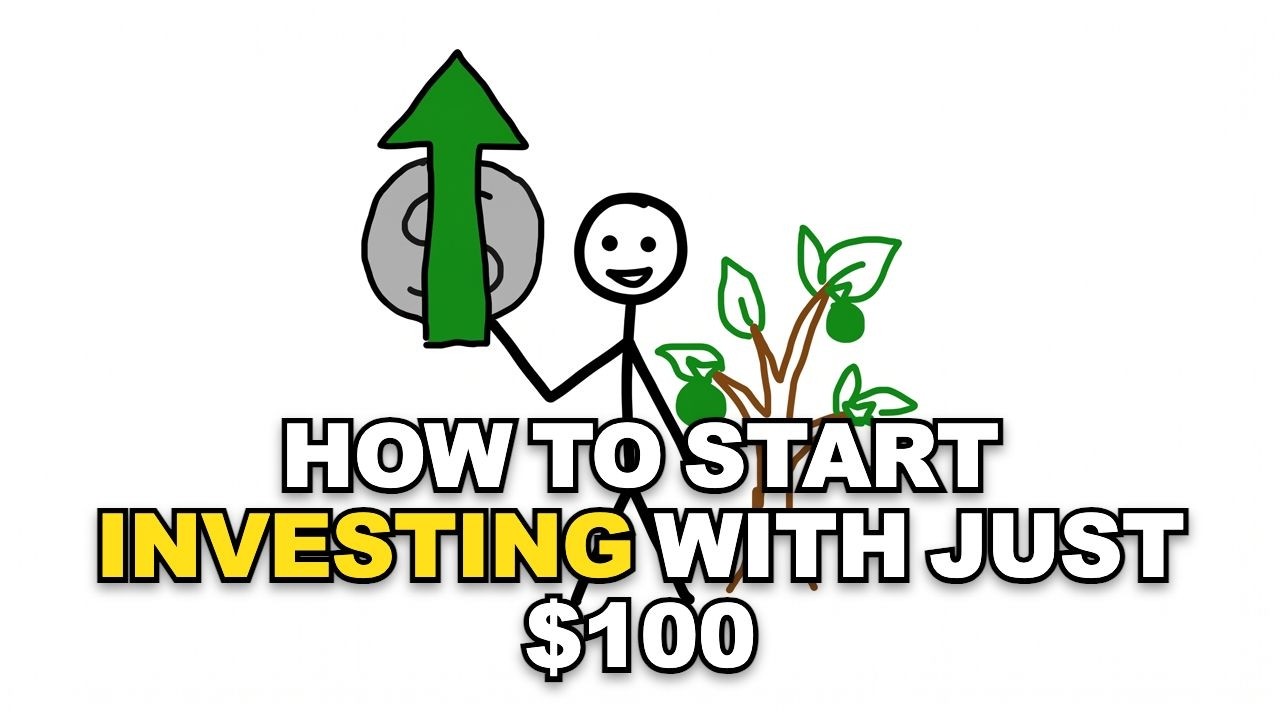
You don’t need thousands of dollars to start investing. Thanks to fractional shares, low- and no-minimum accounts, and mobile investing apps, $100 is more than enough to get started today. The real advantage of starting small isn’t the amount itself — it’s building the habit and giving your money time to grow. Here’s a practical, step-by-step guide.
Why Starting Small Still Matters
The biggest factor in long-term investing success isn’t how much you start with — it’s time in the market. Thanks to compound growth, money invested today has more time to grow than the same amount invested five years from now. Starting with $100 gets you in the game, builds the habit of investing regularly, and helps you learn the mechanics without risking a large sum.
Step 1: Get Clear on Your Goal and Timeline
Before choosing where to put your $100, ask what you’re investing for:
- Long-term growth (retirement, wealth building, 10+ years away) → favors stocks and stock-based funds, which carry more short-term volatility but higher historical long-term returns.
- Medium-term goal (a home down payment in 3–7 years) → favors a more balanced or conservative mix.
- Short-term goal (under 2–3 years) → investing generally isn’t ideal here; a high-yield savings account is usually safer, since markets can drop right before you need the money.
Step 2: Make Sure the Basics Are Covered First
Before investing, it’s generally worth having:
- A small emergency cushion, even a modest one, so a surprise expense doesn’t force you to sell investments at a bad time.
- No high-interest debt (like credit cards) outstanding, since paying that off is often a better “return” than most investments.
If those are in place, $100 is a reasonable amount to start putting to work.
Step 3: Choose an Account Type
- Brokerage account — a flexible, taxable account with no restrictions on withdrawals. Good for general investing goals.
- Retirement account (IRA) — offers tax advantages (traditional or Roth), but comes with rules around withdrawals before retirement age. A Roth IRA is popular for beginners because contributions can generally be withdrawn without penalty, though earnings have restrictions.
- Employer 401(k) — if your employer offers one, especially with a matching contribution, this is often the highest-priority place to invest first, since an employer match is essentially free money.
Step 4: Pick a Low-Cost Brokerage or App
Look for a platform with:
- No account minimums
- No or low trading commissions
- Fractional share investing (lets you buy a slice of an expensive stock or ETF with a small dollar amount)
- Low expense ratios on any funds offered
Most major brokerages today offer commission-free trading and fractional shares, making it possible to build a diversified portfolio with just $100.
Step 5: Decide What to Invest In
With a small amount, diversification and low costs matter more than picking “hot” individual stocks. Common beginner-friendly options:
- Index funds or ETFs — a single fund can hold hundreds or thousands of companies, spreading out risk. Broad market funds (tracking something like the total U.S. stock market or the S&P 500) are popular low-cost starting points.
- Target-date funds — automatically adjust their mix of stocks and bonds as you approach a target year (like a retirement date), offering a hands-off, diversified option.
- Robo-advisors — automated platforms that build and manage a diversified portfolio for you based on your goals and risk tolerance, often with very low minimums and fees.
- Individual stocks — possible with fractional shares, but riskier with a small amount since you can’t diversify much with $100 alone.
For most beginners, a single low-cost, broadly diversified ETF or index fund is a simple, effective starting point.
Step 6: Understand the Fees
Small amounts are especially sensitive to fees, since a flat fee eats up a bigger percentage of a small balance. Watch for:
- Expense ratios — the annual fee funds charge, expressed as a percentage. Lower is generally better; many index funds charge a small fraction of a percent.
- Trading commissions — increasingly rare among major platforms, but worth confirming.
- Account fees — maintenance or inactivity fees on some platforms.
Step 7: Automate and Stay Consistent
The real power of investing $100 comes from what happens next — doing it repeatedly. Setting up automatic recurring contributions, even small ones, builds the habit and takes advantage of dollar-cost averaging: investing a fixed amount at regular intervals, which smooths out the impact of market ups and downs over time since you buy more shares when prices are low and fewer when prices are high.
Step 8: Reinvest Any Dividends
Many funds and stocks pay dividends. Opting into automatic dividend reinvestment lets those payouts buy more shares automatically, compounding your growth over time without any extra effort.
Step 9: Resist the Urge to Check Constantly
With small amounts especially, day-to-day price swings can feel dramatic in percentage terms but are often just market noise. Frequent checking tends to encourage emotional decisions — panic-selling during dips or chasing gains — which historically hurts long-term returns more than it helps.
Common Mistakes to Avoid
- Trying to pick individual “winning” stocks with your entire $100 instead of diversifying.
- Chasing trends or highly volatile assets hoping for fast gains.
- Letting cash sit uninvested in a brokerage account for long periods — that’s essentially the same as not investing at all.
- Ignoring fees, which compound negatively over time just as returns compound positively.
- Stopping after the first $100 — the habit of continuing to invest matters more than the initial amount.
Bottom Line
Starting with $100 is entirely realistic. The tools available today — fractional shares, no-minimum accounts, and automated investing — remove the old barriers to entry. What matters most isn’t the size of your first contribution, but building the habit of investing consistently, keeping costs low, staying diversified, and giving your money time to grow.
This article is for general informational purposes only and isn’t financial advice. Investing involves risk, including potential loss of principal. Consider consulting a licensed financial advisor to evaluate what’s appropriate for your specific situation and goals.